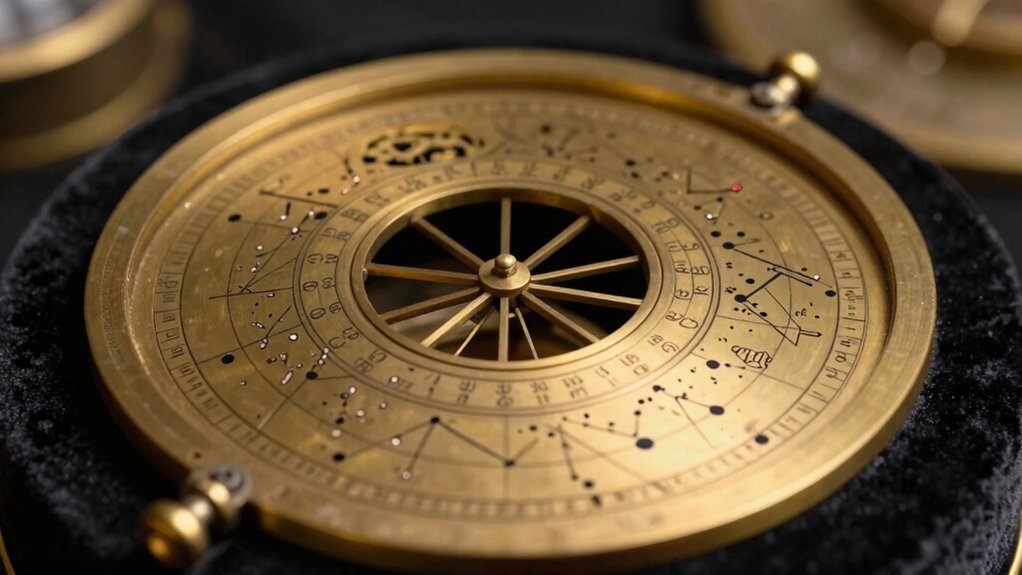
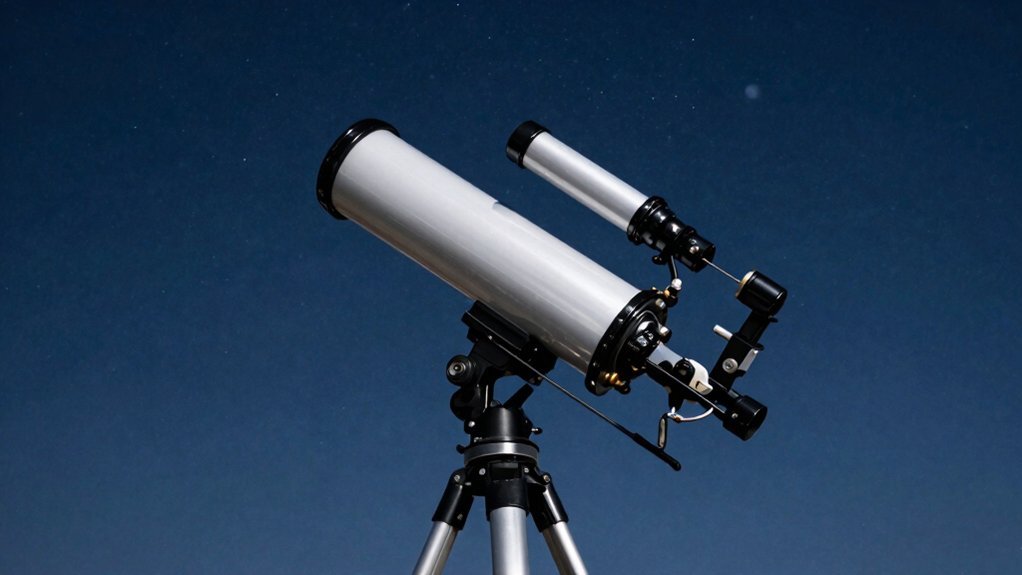
You’re wondering why Webb looks like a giant, golden origami kite instead of a sleek tube. Here’s the thing: its 6.5-meter gold mirror folds up to fit inside a rocket, then unfolds in space. Now, that massive tennis-court-sized sunshield blocks the sun’s heat, keeping instruments freezing cold for clear infrared views. Obviously, this unique design lets you see ancient galaxies Hubble missed. Stick around to see exactly how it unfolds.
Why Does Webb Look So Different From Hubble?
Why does Webb look like a giant, folded origami project compared to Hubble’s sleek tube? You notice the sharp angles because Webb’s 6.5-meter mirror must fold to fit inside a rocket. Hubble’s 2.4-meter tube simply didn’t need that complex packing. These design differences aren’t just for launch; they serve critical functional purposes too.
Now, consider the heat. Webb hunts infrared light, so it must stay at minus 230 degrees Celsius. That huge sunshield blocks sunlight to keep instruments cold, while Hubble orbits closer and stays warmer. Obviously, distinct scientific jobs require distinct shapes.
You see a layered machine because Webb deploys far from Earth, unlike Hubble which astronauts could visit. The faceted mirror collects six times more light than Hubble’s smooth one. This unique architecture lets you peer deeper into the cosmos. Just as selecting the right instrument depends on optics and performance, Webb’s specific design ensures it can detect faint infrared signals that other telescopes miss. When evaluating any telescope, understanding how optical design impacts light gathering is essential for matching the tool to your specific stargazing goals. A larger aperture size directly increases the amount of light a telescope can gather, allowing for clearer views of distant objects. Ready to see how that gold mirror actually captures the light?
How the Gold Honeycomb Mirror Captures Light
You wondered how that folded origami actually sees, and honestly, it’s all about the gold honeycomb. This massive mirror structure spans twenty-one feet yet fits inside a rocket because eighteen hexagonal segments fold up. Each beryllium piece weighs only twenty kilograms but works together as one giant concave surface.
Now, imagine light hitting that microscopically thin gold layer. The vapor-deposited coating creates perfect gold reflection specifically for infrared wavelengths. You need this because distant galaxies emit faint heat signatures visible only in infrared. The hexagonal shape minimizes dead space while maximizing your collecting area to twenty-five square meters. Effective telescope design relies on matching the optical system to the specific wavelengths of light being observed to ensure maximum clarity and data collection. For optimal viewing, enthusiasts should prioritize thermal stability to prevent mirror distortion caused by temperature fluctuations. Understanding the fundamental light gathering power of a telescope explains why larger mirrors are essential for detecting such faint cosmic objects.
Here’s the thing: atomic-level precision lets these segments act as a single optical surface. Obviously, this design captures six times more light than Hubble ever could. Your view of the universe depends entirely on this golden, segmented eye working perfectly. The gold coating significantly boosts performance by reflecting infrared light that other materials would absorb. Next, you’ll want to know what protects this delicate system from the sun’s heat.
What the Five-Layer Sunshield Actually Does
Five massive layers stand between you and total thermal chaos. You might wonder how a thin sheet blocks blazing solar heat. These Kapton membranes, each thinner than plastic wrap, create a tennis-court-sized barrier. They keep the Sun, Earth, and Moon firmly on one hot side.
Now, consider the gap between layers. They never touch, stopping direct heat conduction completely. Aluminum and doped-silicon coatings reflect solar energy back into deep space immediately. This clever design enables essential passive cooling without needing heavy cryogens. You see, each layer radiates absorbed heat outward before it penetrates deeper. The angled configuration of these five layers is strategically designed to facilitate optimal heat rejection.
Here’s the thing: this system drives a 570°F temperature drop across the shield. NASA calls this critical thermal control essential for detecting faint cosmic infrared signals. Without it, local heat would drown out the universe’s oldest light. You now understand why this giant umbrella stays perpetually shadowed during operations. Next, you’ll want to see how such a huge structure actually unfolds.
Understanding the specific thermal insulation properties of these materials clarifies why traditional metal mirrors would fail in this environment.
How the Telescope Unfolds in Deep Space
Since the fully built telescope was too huge for any rocket, engineers folded Webb into a compact stowage configuration. You might wonder how such a massive machine fits inside a rocket at all. It literally transforms after liftoff, looking nothing like its final self while stowed tight. Now, watch the complex unfolding sequence begin during those critical first two weeks in deep space. The solar array deploys first, followed by the massive five-layer sunshield that protects your future images. Each step happens over days, not hours, to reduce mechanical risk while traveling toward L2. Here’s the thing: the eighteen hexagonal mirror segments extend last, completing the deployment process on January 8, 2022. You see the full 6.5-meter aperture only after this final wing opens successfully in orbit. This intricate dance guarantees the telescope reaches its intended physical shape before alignment starts. Understanding these deployment mechanics is essential for appreciating why specific engineering choices were made to ensure mission success. The revolutionary gold-coated beryllium mirrors were selected for their ability to remain stable in extreme cold while capturing faint infrared light. Proper optical alignment of the primary mirror segments is the crucial next phase that turns the deployed structure into a functional observatory. Ready to learn why it needs to be this big? Let’s explore that next.
Why Webb Is as Large as a Tennis Court
That massive unfolding sequence you just watched leads to a surprising size comparison. You’re probably wondering why NASA calls it tennis-court sized. Here’s the thing: that huge sunshield measures 22 by 12 meters, blocking heat from the Sun, Earth, and Moon. Obviously, you need serious shade to keep instruments cold enough for deep space viewing.
Your infrared sensitivity demands this massive scale because warm telescopes create their own noise. The size requirements forced engineers to fold everything origami-style just to fit inside the rocket. Now, that 6.5-meter mirror gathers six times more light than Hubble, but the shield spans wider. You see, without this giant barrier, those faint ancient galaxies would vanish in thermal glare. Effective thermal management is the critical reason the observatory must remain in permanent shadow to detect faint infrared signals from the early universe. Selecting the right optical design ensures the telescope maintains the stability needed to capture these distant images without interference. Understanding the specific aperture size helps astronomers realize why larger mirrors are essential for gathering the faint light required to study the cosmos effectively.
What Real Images Reveal About Its Design
You’re probably staring at those photos wondering why the mirror looks like a golden honeycomb instead of a smooth dish. That unique mirror design features eighteen hexagonal segments coated in gold to maximize infrared capabilities. You see eighteen distinct pieces working together as one giant 6.5-meter reflector collecting invisible light. Now look behind that golden flower to spot the massive, kite-like sunshield blocking heat. This five-layer membrane keeps the telescope freezing cold so those sensitive instruments function correctly. You notice the compact spacecraft bus looks tiny compared to the huge, delicate optics above it. Obviously, this machine prioritizes function over sleek aesthetics, appearing more mechanical than decorative. Real images prove engineers built this specifically for deep-space infrared observing, not visible light. You understand now that every strange shape serves a critical purpose for seeing the universe. The telescope’s ability to see through gas and dust reveals hidden stars that remain obscured to other observatories. Enthusiasts should note that gold coating is essential because it reflects infrared light more efficiently than silver or aluminum. Next, consider how this specific layout enables its journey to the distant L2 point. Understanding the optical resolution helps explain why such a large aperture is necessary to distinguish fine details in distant galaxies. Effective telescope use requires knowing that light gathering power increases with aperture size, allowing fainter objects to be detected clearly.