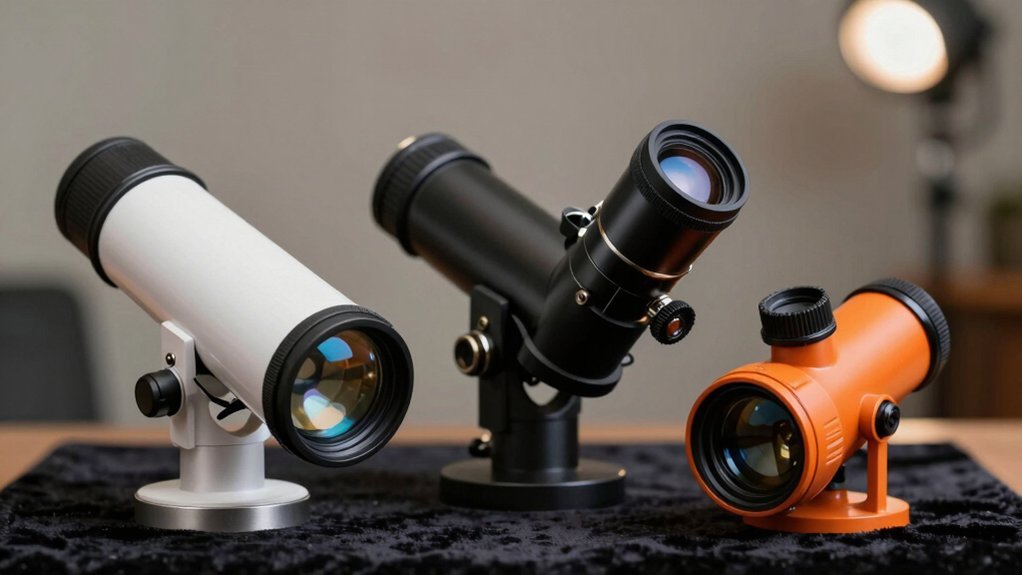
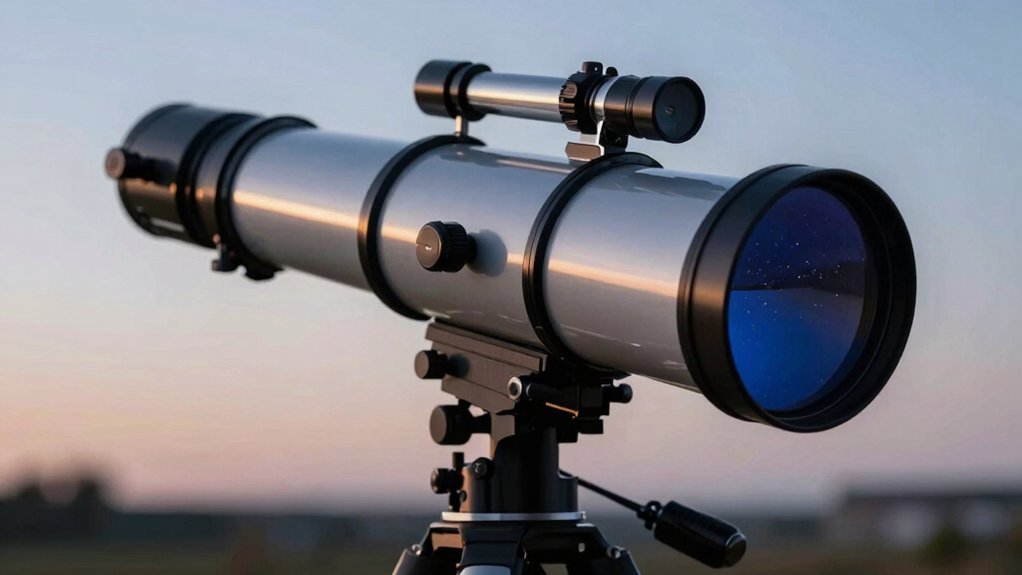
You’re stuck deciding between instant freedom and deep-space power, right? Obviously, binoculars let you grab 10×50 views instantly without heavy mounts. Telescopes need setup time but gather four times more light with double the aperture. Now, pick binoculars for birding or quick star sweeps; choose scopes for faint galaxies. Your next move depends on whether you value portability or raw detail most. Stick around to see exactly which gear fits your specific sky-watching style.
Binoculars vs Telescopes: Key Differences at a Glance
Confusion often clouds the choice between these two optical tools. You wonder which fits your needs best, and that’s a smart question. Binoculars use dual channels for stereoscopic depth, while telescopes rely on a single path. This fundamental optical design difference shapes your entire viewing experience immediately.
Now, consider the size comparison before you pack your gear. Binoculars stay compact in your hands, ready for hiking or travel. Telescopes demand tripods and heavy mounts, making them less portable for casual trips. You’ll find binoculars easier to aim since both eyes stay naturally aligned.
Here’s the thing: binoculars offer instant comfort for scanning wide areas quickly. Telescopes require careful setup and collimation before you see any sharp details. Obviously, one tool isn’t better; they just serve different observation styles perfectly. Choose based on whether you need mobility or maximum magnification power today. While binoculars excel at portability, understanding the specific telescope types available can help you decide if upgrading to one is necessary for your deep-sky goals. For those prioritizing deep-sky observation, a telescope with a larger aperture size will gather significantly more light than standard binoculars. To truly appreciate faint objects, you must first ensure your viewing location has minimal light pollution blocking the stars from view.
Magnification and Field of View Compared
Magnification numbers often trick you into thinking bigger is always better for stargazing. You might crave 300x power, but holding that steady proves impossible without a massive mount. Binoculars stick to 7x or 10x, keeping your view shake-free and wide.
Now, consider your actual viewing goals before choosing. High power narrows your sky patch drastically, often losing the context you need. Understanding magnification trade offs helps you match gear to specific celestial targets effectively.
Field considerations matter just as much as raw zoom power. A 7×50 binocular shows seven degrees of sky, while telescopes often show less than two. You scan constellations easily with wide views but need narrow fields for planetary details. The exit pupil size determines how much light actually reaches your eye, affecting brightness and comfort during observation.
Obviously, large clusters demand breadth, whereas tiny craters require intense focus. Balance these factors against your patience for setup and tracking. Which view suits your next night under the stars best? Choosing the right optical aperture ensures you gather enough light to see faint objects clearly without sacrificing the stability needed for high-magnification viewing. Remember that a telescope’s ability to resolve fine detail is fundamentally limited by its aperture diameter rather than just the eyepiece used.
Light Gathering Power and Image Detail
You might think two eyes double your light, but aperture area actually drives the brightness you see. Doubling diameter quadruples collected light, so a 100mm telescope beats two 50mm binocular lenses easily. Your binoculars only gain about 40% extra perceived brightness through binocular summation, not double the power.
Now, consider this light gathering comparison for faint deep-sky objects. Telescopes act as massive light buckets, revealing galaxies that smaller binocular objectives simply cannot detect. Larger aperture directly improves resolution, letting you spot finer details on the Moon or planets. While binoculars offer portability, the optical magnification range of a telescope allows you to zoom in on specific celestial features that remain invisible to lower-power instruments. Refractor designs often utilize achromatic lenses to minimize color fringing while maintaining sharp contrast for planetary viewing.
Here’s the thing: better coatings boost optical performance, yet raw size still rules for detail. You get comfort with two eyes, but telescopes win for faint targets every time. Obviously, bigger glass shows more universe. Understanding optical resolution limits helps explain why aperture size is the primary factor in distinguishing close double stars or fine planetary features.
Choose binoculars for wide views, but grab a telescope when you need serious detail. Which faint object do you want to see first?
Portability and Setup Requirements for Travel
When you’re packing for a trip, you probably wonder if lugging a telescope is worth the hassle. Honestly, binoculars win on travel convenience every single time. They fit right in your coat pocket or day bag without needing extra cases.
Now, consider the weight comparison. Binoculars are light enough to hold while hiking, but telescopes demand heavy tripods and mounts. You can grab binoculars and start looking immediately, whereas telescopes need assembly and alignment first. That setup time kills spontaneous moments when you just want to glance at the sky. Telescopes often require thermal equilibrium to stabilize internal air currents before providing sharp images, a process that is impractical during short travel stops.
All right, here’s the reality: telescopes need dedicated space and careful handling during transit. Binoculars let you move freely between viewing spots without breaking down gear. If you value simplicity and speed, binoculars are clearly your best bet for travel. So, ask yourself: do you really want to carry all that extra bulk? While telescopes offer superior magnification for deep-sky observation, the portable nature of binoculars ensures you never miss an unexpected celestial event while on the move. Unlike bulky optical tubes that require collimation checks before use, binoculars remain ready to view instantly upon removal from their case.
Best Use Cases: Birding, Sports, or Astronomy?
Since you’re wondering which tool fits your hobby, let’s clear up that confusion right now. For birding, binoculars offer essential birding benefits like wide fields for tracking fast movers. You’ll easily follow birds in trees without shaking or losing your target quickly.
Sports tracking demands similar agility, so grab binoculars to watch action across the field. Telescopes struggle here because they narrow your view too much for dynamic games. You need moderate power, not extreme magnification, to see the whole play unfold.
When your astronomy focus shifts to deep space, telescopes reveal faint galaxies better than any glass. However, binoculars still shine for casual observing of the Moon or sweeping star fields. A 10×50 pair gives you bright, stable views without heavy mounting gear. To get the most out of your session, ensure you find a location with minimal light pollution for the clearest possible views of the night sky. Unlike telescopes that often require complex alignment, binoculars provide an intuitive upright image orientation that makes scanning the horizon or treetops significantly easier for beginners. While high-end optics often feature specialized lens coatings to maximize light transmission, understanding the specific optical glass types used can help you gauge overall image clarity and color fidelity.
Choose binoculars for moving subjects and telescopes for detailed cosmic study. Which scene matches your next adventure most closely?
How to Choose Between Binoculars and Telescopes
All right, you’ve seen where each tool shines, but picking one still feels tricky. You must weigh your user preferences against your daily observing habits carefully. Do you crave quick, wide-field scanning or deep, detailed magnification?
Binoculars offer portability and ease, letting you grab them instantly for broad views. Telescopes demand setup time yet deliver superior light gathering for faint, distant targets. Obviously, higher power means a narrower field of view with telescopes. Understanding aperture size is crucial because it directly determines how much light the instrument can collect to reveal fainter objects.
Consider your environment and budget before committing to heavy gear. NASA suggests starting with 10×50 binoculars if you value simplicity first. Match your instrument to your specific goals for the best results. Stabilizing your view with a tripod or steady mount significantly improves image clarity when using high-magnification optical instruments.
Choose binoculars for casual fun or telescopes for serious, technical exploration. Which viewing style truly fits your lifestyle right now? Just as a functional web page requires a clear step-by-step build, selecting the right optics depends on understanding practical tips for getting a working result.