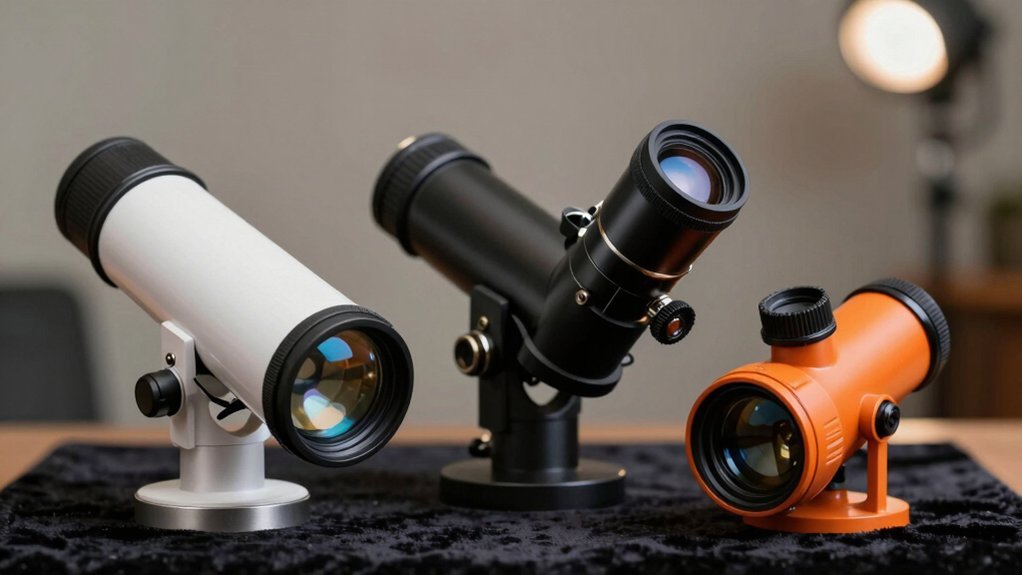
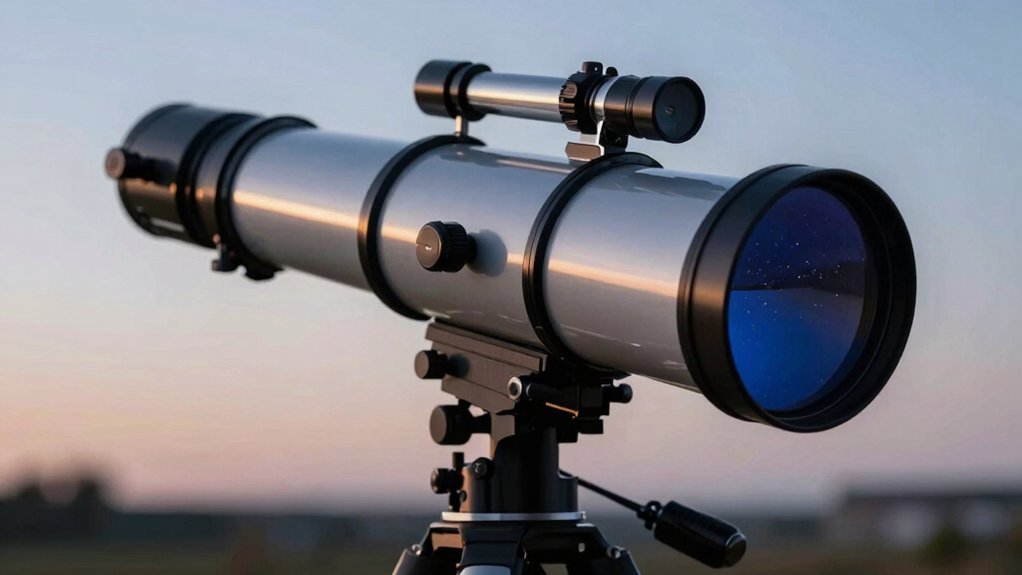
You’re stuck choosing between sharp planets and faint galaxies, right? Refractors deliver crisp lunar details with zero maintenance, while reflectors gather four times more light for deep-sky hunting. Obviously, your budget matters since mirrors cost less per inch of aperture. If you want quick setup, grab a small refractor; for maximum power, choose a reflector. Keep scrolling to uncover exactly which design matches your specific observing goals.
Refractor vs Reflector: Which Design Fits Your Goals?
So, how do you actually pick between a refractor and a reflector? You start by defining your specific astronomical goals clearly. Do you crave sharp lunar details or faint galaxy light? Your optical preferences dictate the perfect match here.
Refractors excel at bright targets like planets because they offer high contrast without distortion. They work best under five inches for visual sharpness. Reflectors dominate deep-sky hunting since larger apertures cost considerably less per dollar. You get more light-gathering power for your budget with mirrors. This cost efficiency allowed historical figures to build massive instruments that unveiled the legacy of revolutionary telescopes by gathering unprecedented amounts of light.
Consider maintenance too. Refractors need almost zero upkeep, while reflectors require regular collimation checks. If you want quick sessions, simplicity wins. However, if maximum reach matters most, accept the extra setup time. Note that improper cleaning can ruin coatings, so always use gentle tips when maintaining your optics.
Your choice hinges on prioritizing contrast or raw aperture. Decide what you value most before buying anything. Remember that observing conditions significantly impact what you can realistically see regardless of your telescope type. Next, let’s examine exactly how their optics differ.
How Do Refractor and Reflector Optics Differ?
You’ve picked your goals, but the actual optics still feel like a black box. Refractors bend light through a front lens, while reflectors bounce it off a primary mirror. Obviously, these distinct light paths dictate your entire viewing experience.
Now, consider how each design handles color. Lenses sometimes split white light into fringes, hurting optical performances slightly. Mirrors avoid this issue entirely since they reflect all wavelengths together. However, reflectors need a secondary mirror that blocks some incoming light.
Here’s the thing: refractors offer unobstructed views but cost more for large sizes. Reflectors fold the light path, creating compact tubes for bigger apertures. You’ll also collimate mirrors occasionally, whereas lenses stay aligned rigidly. Because mirrors do not suffer from chromatic aberration, reflecting telescopes often provide superior contrast for deep-sky observation at a lower price point. Experts recommend this design for those seeking maximum aperture without the high cost associated with large glass lenses. Proper maintenance of these optical systems ensures long-term durability and consistent performance under various observing conditions.
Ultimately, your choice depends on whether you prioritize sharpness or aperture size. Next, let’s see which telescope actually gathers more light for deep sky objects.
Which Telescope Gathers More Light for Deep Sky?
Why does aperture matter so much for those faint smudges you’re hunting? You need photons, and reflectors deliver them cheaply. A 200 mm reflector gathers four times more light than a 100 mm refractor. That huge aperture advantage directly boosts your deep sky visibility instantly.
Now, consider your budget. Large lenses cost a fortune, limiting refractor sizes severely. Reflectors like Dobsonians offer massive mirrors for pennies per inch. You see fainter galaxies and nebulas because more light hits your eye. Obviously, brightness beats sharpness when chasing ghostly fuzzies in the dark. While refractors provide crisp images, the optical design of reflectors eliminates chromatic aberration entirely, ensuring color-free views of deep sky objects.
Here’s the thing: equal aperture means equal light, but you get more inches with reflectors. Don’t waste money on small lenses if you want big views. Your target list expands dramatically with that extra light grasp. Choose the tube that fills your eyepiece with photons, not just pretty colors. While refractors excel at high-contrast views, the cost per inch of reflectors allows beginners to access apertures that truly reveal the depth of the universe. This financial efficiency makes the Dobsonian mount the most popular choice for entry-level deep sky observing due to its stability and simplicity. Next, let’s talk about planetary details.
Do Refractors Show Sharper Planet Details?
Wondering if refractors really deliver those crisp planetary views everyone raves about? You’ll find their unobstructed path boosts planetary contrast considerably. This design avoids the central blockage seen in reflectors, revealing subtle Jovian belts easily.
Here’s the thing: optical performance relies heavily on that clean light cone. You get tight, pinpoint images with minimal scatter most nights. Reflectors can match this only with tiny obstructions and perfect collimation.
Obviously, atmosphere limits detail more than glass sometimes. Yet refractors often win in average seeing because they lack cool-down delays. You won’t fight mirror shifts or alignment issues during your session. For the sharpest planetary observations, you should aim for magnification between 200x and 300x where views are typically most beneficial.
A poor refractor still loses to a great reflector, though. Quality matters most regardless of the tube shape you choose. Ultimately, you gain sharper views when contrast stays high naturally. Expert guidance suggests that thermal equilibrium is critical for maintaining image stability in any optical system. The absence of a secondary mirror eliminates diffraction spikes that can slightly reduce fine detail visibility in reflector designs. Beginners should also ensure they observe from a location with minimal light pollution to maximize the visibility of faint sky details.
Now consider how much aperture fits your actual budget constraints.
How Much Aperture Can You Afford on a Budget?
Now that you’ve weighed image sharpness, let’s tackle how much glass your wallet actually handles. You probably wonder why some scopes cost so much more for similar looks. Here’s the thing: mirrors cost less to make than big lenses.
Reflectors give you way more aperture per dollar. A $200 reflector beats a $200 refractor because it gathers considerably more light. This extra light collection reveals fainter stars and finer details instantly. Obviously, bigger lenses get expensive fast once you pass four inches.
Your budget constraints often force a choice between size and portability. If you want maximum power, grab a five-inch reflector. It matches a four-inch refractor’s performance but costs far less. However, small refractors still work well if you travel light often.
Prioritize aperture if you stay home. Choose portability if you hike. What matters most for your specific observing habits tonight? Since mirror optics are simpler to manufacture at large diameters, they remain the most cost-effective path to deep-sky viewing. This economic advantage allows beginners to access larger apertures without exceeding a modest budget, making deep-sky objects more visible than with similarly priced refractors. Consequently, investing in optical diameter directly determines the faintest celestial objects you can resolve within your financial limits.
What Maintenance Does Each Telescope Type Need?
Since you’re weighing long-term care, let’s clear up the confusion about keeping your optics sharp. You’ll find refractor maintenance frequency stays low because sealed tubes protect lenses well. Just blow off dust gently; rarely touch the glass directly to avoid scratches.
Reflectors demand more hands-on work since exposed mirrors collect grime faster. Your cleaning techniques might involve washing mirrors with soapy water, then re-collimating alignment carefully. Obviously, removing mirrors risks misalignment, so prepare for extra adjustment time afterward.
Both scopes need dry storage and regular mount checks to prevent rust or loosening. Never use harsh chemicals on any optical surface, regardless of your telescope type. Moisture must evaporate completely before you pack everything away for the night. Implementing clear expert-backed guidance ensures your equipment remains in optimal condition for years of stargazing.
Refractors offer ease, while reflectors require periodic deep cleaning and realignment efforts from you. Choose based on how much tinkering you actually enjoy doing outside under stars.
Which Design Is Best for Travel and Quick Setup?
Why does packing your scope feel like a hassle before you even reach the stars? You probably worry about lugging heavy gear up a hill. Travel considerations often favor refractors because their narrow tubes fit easily into compact bags. Small models weigh under 5 kg, making them perfect for hiking or backpacking trips.
Setup efficiency matters most when you want spontaneous views under dark skies. Refractors usually win here since they need zero optical alignment after transport. You can often start observing in under five minutes with tool-free assembly. Reflectors offer more aperture, but bulkier designs slow down your quick deployment routine. While reflectors provide greater light-gathering power, their larger optical tubes often require disassembly or specialized cases that add significant weight to your loadout. The historical shift toward reflecting telescopes allowed astronomers to build massive instruments that refractors could not match due to lens sagging and chromatic aberration.
Obviously, you want a telescope that waits for no one during clear nights. Choose a lightweight refractor if speed and portability drive your astronomy adventures. Understanding optical alignment requirements helps clarify why sealed refractor tubes maintain their configuration better than open-truss reflectors during transit. Now, have you thought about how your chosen mount impacts this entire experience?
How Do Mounts Affect Your Refractor or Reflector?
You’re wondering if your mount really matters as much as the tube itself. Absolutely, it does. Your choice of mount types directly shapes your entire user experience. An equatorial mount tracks stars effortlessly, while an alt-azimuth setup offers simpler pointing.
Now, consider balance considerations. You must counterweight your gear perfectly to prevent strain. An unbalanced telescope wobbles, ruining your view instantly. Stability impact also dictates image clarity, especially at high magnifications. A shaky mount makes planets blur, regardless of your optics. Proper balance prevents stress on motorized mount gears. Tracking accuracy suffers without proper polar alignment on equatorial designs. You’ll constantly nudge a basic mount to keep objects centered. Obviously, solid support beats fancy glass every time for steady viewing. Prioritize a sturdy base before upgrading your optical tube assembly. This foundation determines whether you enjoy the night sky or fight your equipment. Visualizing how mechanical stability works can help you understand why a rigid tripod is essential for clear views. Next, you need to decide which optical design actually fits your beginner status best.
Should Beginners Choose a Refractor or Reflector?
So, where do you actually start when picking your first telescope? You likely feel overwhelmed by the sheer number of options available today. Obviously, your personal preferences dictate whether you grab a refractor or reflector initially.
Refractors offer instant-ready simplicity since their sealed tubes need almost zero maintenance. You just point them at the Moon and enjoy sharp, high-contrast views immediately. Reflectors demand collimation, which means aligning mirrors before every serious observing session begins.
Beginner experiences often favor refractors for quick lunar looks or portable backyard sessions. However, reflectors give you more aperture per dollar if you hunt faint deep-sky objects. A 70mm refractor suits casual users, while a 130mm reflector fits budget-conscious explorers better.
Here’s the thing: simplicity usually wins for your very first instrument purchase. Do you value easy setup over maximum light-gathering power right now?