Wondering if you need fancy gear to spot the ISS? You absolutely don’t need a telescope because the station shines brighter than most stars. Just check NASA’s Spot the Station app for exact dawn or dusk times in your area. Look for a steady, non-blinking white light zipping across a dark, wide horizon. Now that you know it’s visible to the naked eye, let’s pinpoint exactly when and where to catch it.
Confirm You Can See the ISS Without a Telescope
Can you really spot the ISS without a telescope? Absolutely, you see it with bare eyes. NASA confirms no equipment helps here. It looks like a bright, fast-moving white dot.
You need specific iss visibility factors to succeed. Dawn or dusk works best because the station reflects sunlight while you stand in darkness. Clear skies and wide views matter too. Trees often block low passes, so aim high. Just as beginner stargazers are advised to find dark sky locations away from city lights, escaping light pollution significantly improves your chances of spotting the station against the background stars. As emphasized in guides for discovering the night sky, allowing your eyes to adjust to the darkness for at least 20 minutes will help you detect fainter celestial objects more easily during your wait.
Master these observing techniques to distinguish it from planes. The ISS moves smoothly in one direction without flashing lights. It acts like a steady star racing across the sky. Your view lasts only a few minutes usually.
Watch westward near sunset for that sudden bright streak. You will notice it fading abruptly as it hits Earth’s shadow. This simple trick confirms you found the real station. Now you know exactly what to look for tonight.
To estimate where it will appear, remember that one fist held at arm’s length equals about 10 degrees of sky. Successful observation also requires checking weather forecasts to ensure cloud cover will not obstruct your view of the passing station.
Check NASA Tools for Exact ISS Pass Times
Where exactly do you look to catch the ISS at the perfect moment? You need precise data because guessing rarely works. NASA’s Spot the Station website and mobile app solve this problem instantly. They calculate exact flyover schedules based on your specific location and time zone.
Download the NASA app today for push notifications about upcoming passes. These alerts include date, time, duration, and visibility conditions so you never miss a beat. The tool even shows maximum height and directions for appearance or disappearance. Use these built-in Viewing tips to distinguish strong passes from weak ones quickly.
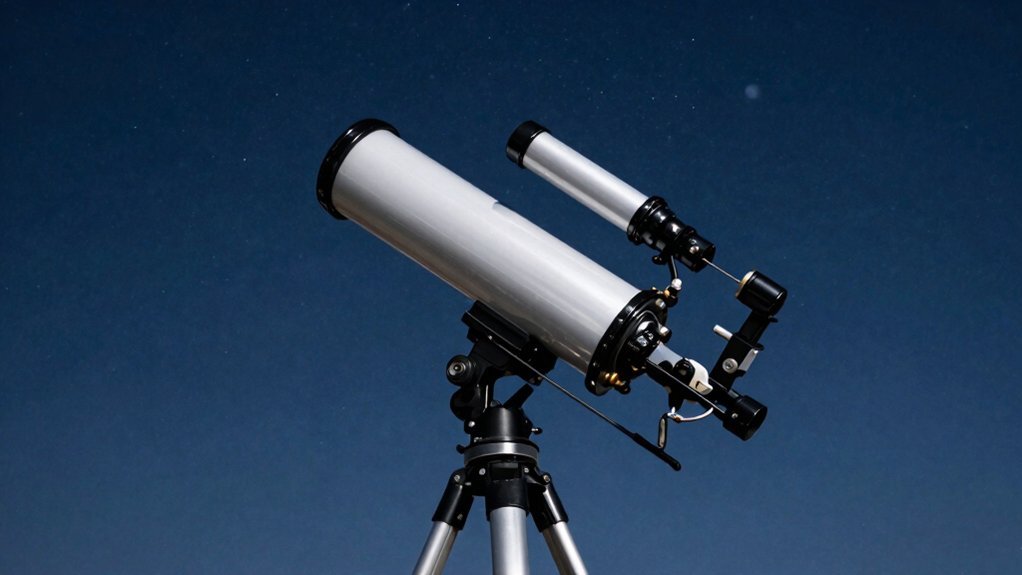
Obviously, you cannot see the station during bright daylight hours. The app confirms when sunlight reflects off the orbiting lab while you sit in darkness. Check the real-time map or augmented reality mode to track its current position accurately. Start setting your location now to get personalized sighting opportunities this week. Successful observation also requires finding a spot with minimal light pollution to ensure the station’s reflected glow stands out clearly against the night sky. While the ISS is easily visible to the naked eye, understanding how different telescope optics function can help you appreciate why such powerful magnification is unnecessary for tracking bright, fast-moving satellites. Just like observing deep-sky objects, your eyes need about 20 minutes to fully adjust to the dark adaptation process for optimal viewing sensitivity.
Wait for Dawn or Dusk for Best Visibility
Since you’re wondering why timing matters so much, let’s clear that up right now. You need twilight because the station must catch sunlight while your sky stays dark. Daylight washes out the view, so dawn or dusk creates perfect contrast for your eyes.
Seasonal variations shift these windows between morning and evening passes throughout the year. You’ll find ideal conditions when the ISS arcs high above local trees and buildings. Clear skies and dark adaptation help you spot that steady, bright white light easily. Remember that light pollution from cities can significantly reduce your ability to see fainter objects or distinguish the station against a bright urban sky. Using binoculars can further enhance your viewing experience by magnifying the station’s path across the night sky.
Spot the Steady, Non-Blinking White Light
When you finally look up, you’ll spot a steady, non-blinking white light cutting across the dark. It looks like a super-bright star that refuses to sit still. You won’t see any flashing red or green navigation lights here. Those blinking signals mean you’re just watching a regular airplane fly overhead.
To identify key features, watch how that single white dot behaves against the black sky. It moves fast, crossing your entire view in less than four minutes usually. You’ll notice it brightens as it climbs higher, then suddenly fades out. This happens when it slips into Earth’s shadow, like someone snuffing a candle. Unlike aircraft that rely on artificial lighting, this object shines because it reflects sunlight while orbiting at 400 kilometers above the surface. Successful viewing often depends on finding a location with minimal light pollution to ensure the station remains visible against the night sky. Since the station is only visible when sunlight hits it while the observer is in darkness, the best time to look is during twilight hours shortly after sunset or before sunrise. While you do not need complex optics for this sighting, understanding how telescope optics work can help you appreciate why the naked eye is actually superior for tracking such fast-moving objects.
Observe movement carefully to distinguish it from fixed stars or erratic planes. The path stays smooth and uninterrupted, often arcing gently from horizon to horizon. Now you know exactly what distinct signature to hunt for tonight. Ready to find the perfect spot for viewing?
Choose a Dark Location With a Wide Horizon
Two simple choices dramatically boost your chances of spotting the station. You need dark skies and a wide, open horizon to succeed. Light pollution from streetlamps washes out the station’s steady glow against the twilight. Find a park corner or field far from bright buildings for ideal viewing.
Now, scan your western sky where most passes begin. Trees or rooftops often block that significant first moment of appearance. A clear horizon lets you track the fast-moving dot for several minutes longer. Higher ground or waterfronts usually offer those unobstructed sightlines you really need.
Obviously, urban backyards work sometimes, but darker sites create much better contrast. You’ll see the station shine brighter when artificial glare doesn’t clutter the background. Pick your spot early so you’re ready before the predicted pass time starts. Just as telescope users seek minimal light pollution to enhance celestial visibility, ISS spotters require similar dark conditions to distinguish the station’s reflection. Much like selecting optics with a larger aperture size gathers more light for faint objects, an open horizon maximizes the visible duration of the pass. For beginners starting their journey, understanding optical magnification helps distinguish why the naked eye suffices for the bright ISS while fainter deep-sky objects demand lenses.
Your next step involves checking the exact time the station flies overhead tonight.