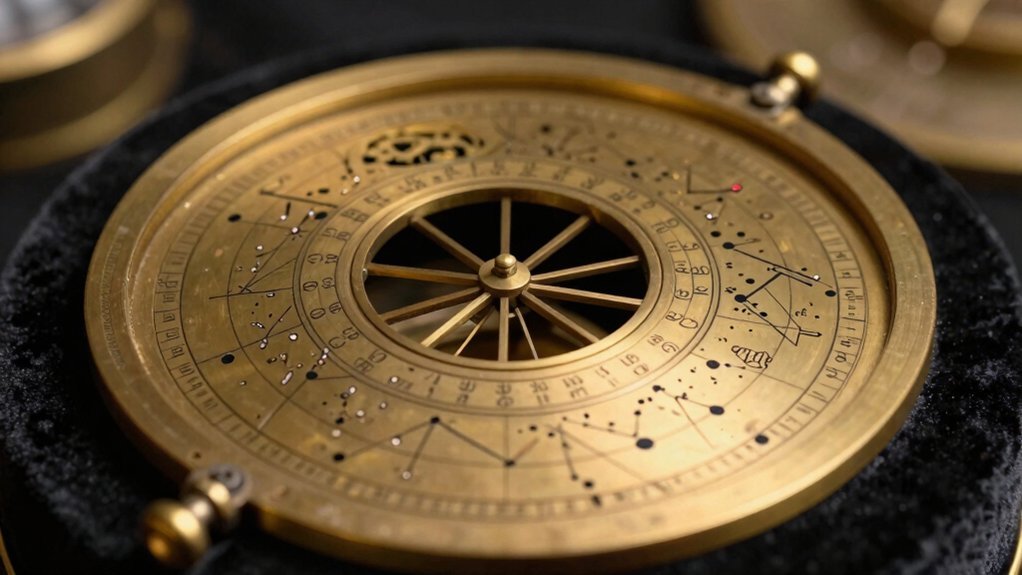
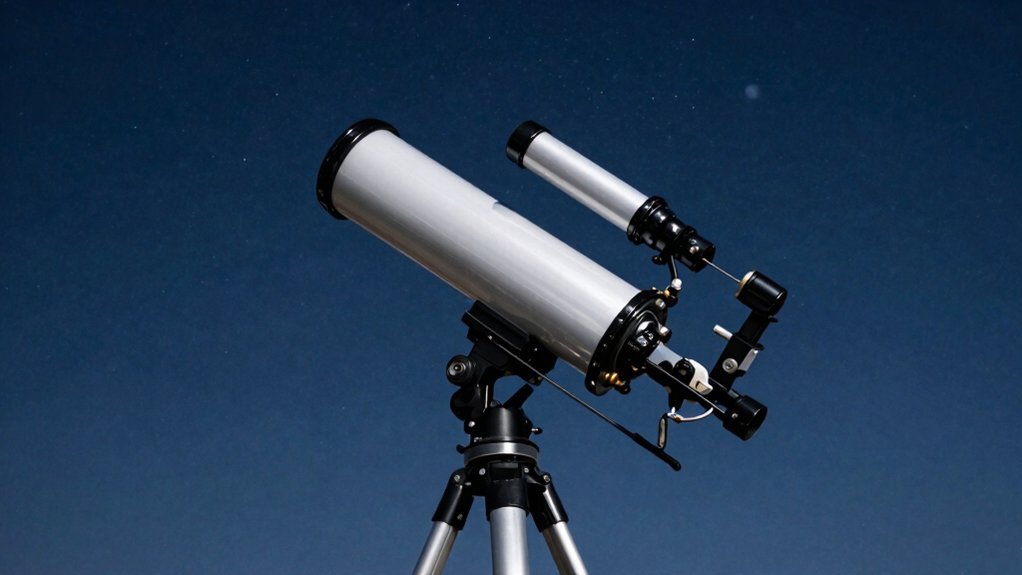
You can’t see Halley’s Comet today because it hides beyond Neptune. You’ll need to wait until July 2061 for its grand return. Obviously, dark skies and a new moon will be your best friends then. You might spot its fuzzy glow with just your eyes if you escape city lights. Keep exploring to uncover exactly where and when you should look.
Is Halley’s Comet Visible Without a Telescope Today?
So, can you actually spot Halley’s Comet with just your eyes right now? No, you cannot see the comet itself today because it won’t return until 2061. Any recent Halley Sightings you hear about actually refer to meteor showers, not the icy nucleus.
Here’s the thing: you are seeing debris the comet left behind years ago. The Eta Aquariids produce ten to twenty meteors per hour during their peak pre-dawn display. You don’t need a telescope for these streaks; binoculars actually hurt your view by narrowing your field.
Obviously, dark skies away from city lights help your eyes adapt for twenty minutes. While the comet hides in Hydra requiring optical aid, its dust trails dance freely above. Focus your attention on the meteor shower instead of hunting the invisible comet. Understanding how aperture size determines light-gathering power explains why the faint nucleus remains hidden while the meteors shine brightly. To maximize your viewing experience, ensure you find a location with minimal light pollution so your eyes can fully adjust to the darkness.
Ready to plan your next stargazing session for the actual comet’s return?
When Does Halley’s Comet Return in 2061?
You’re wondering exactly when to mark your calendar for the real show. Halley’s Comet will reach perihelion on July 28, 2061. That moment marks its closest swing past the Sun. NASA confirms this specific date after careful tracking. You won’t wait another lifetime like the 1986 crowd did.
Understanding comet history helps explain why timing shifts slightly. Its orbital patterns usually span about 76 years total. However, Jupiter and Saturn tug the path, changing speeds. This creates a range between 74 and 79 years sometimes. The 2061 return fits perfectly after the last 1986 visit.
Obviously, you need patience since the wait feels long now. The comet currently sits far beyond Neptune’s cold orbit. It started moving inward after reaching aphelion in late 2023. Mark July 28, 2061, as your primary target date today. Next, you’ll want to know which specific nights offer peak viewing. While waiting for the return, learning about optical aperture will help you select the right instrument to capture the comet’s faint details when it finally arrives. Different telescope designs utilize unique mirror arrangements to gather light, which will be crucial for observing the comet’s dim nucleus against the night sky. A larger light gathering capacity allows telescopes to reveal fainter celestial objects that smaller instruments might miss.
What Are the Best Dates to See Halley’s Comet?
Timing feels tricky when you’re hunting for the perfect night to spot Halley’s Comet. You want the best viewing dates, so focus on late July to early August 2061. That window offers peak brightness when the comet hits magnitude +1.
May and June give strong pre-perihelion chances, while August and September show a developed tail. Observational tips suggest chasing moonless nights near the new moon for dark skies. Finding a location with minimal light pollution is essential for spotting faint celestial objects that would otherwise be washed out by city glow.
Morning hours work before perihelion, but evenings shine after the Sun’s closest approach. Obviously, planning for a range of dates beats picking just one single night. Even with perfect timing, your eyes need about 20 minutes to fully adapt to the darkness before faint details become visible.
Your clear takeaway is to target the summer months of 2061 for maximum glow. Now that you know when, where exactly should you stand to see it? Remember that light pollution from cities can significantly reduce visibility, so traveling to a darker location is often necessary for the best view.
Where Should You Stand to Spot Halley’s Comet?
Location makes or breaks your view of Halley’s Comet. You probably wonder where exactly to stand for the best sight. Obviously, city lights ruin everything, so you need dark skies.
Head to open deserts or high mountains for clear, dry air. These observation locations reduce haze and boost your contrast considerably. You’ll see the coma much sharper from higher elevations.
Ensure you face south with a wide-open horizon free of trees. Buildings block the low sky where the comet often hides. Follow these viewing tips to maximize your precious observing time.
Southern travelers often spot it higher and longer than northern folks. Your geography directly dictates how long the comet stays visible. Choose your spot wisely before the big night arrives.
Just as dark skies are essential for viewing faint celestial objects, they are critical for spotting a distant comet. Now you know where to go, but when should you look? Finding a site with minimal light pollution will further enhance your ability to detect the comet’s faint glow against the night sky. Selecting a location with stable atmospheric conditions ensures that turbulence does not blur the details of the comet’s tail.
What Time of Day Offers the Best View?
Since you’re wondering when to look, the pre-dawn hours actually offer your best shot at seeing Halley’s Comet. You should aim for that window between 3:00 AM and dawn. Earth rotates directly into the dust stream then, boosting your chances considerably.
Here’s the thing: radiant height dictates everything. The higher that point climbs, the more meteors you spot. Prime viewing happens right before sunrise when the radiant peaks near 4:00 AM. Obviously, waiting until evening fails because the sky stays too bright and low.
You need dark skies where the Milky Way shines clearly. Let your eyes adjust for twenty minutes before scanning up. Don’t rush this step or you’ll miss faint streaks entirely. Timing your session just before twilight guarantees maximum darkness and activity. Finding a location with minimal light pollution is essential for spotting faint celestial objects against the night sky.
Grab a warm drink and settle in for those early morning hours. While optical instruments vary, understanding choosing the right telescope ensures you select equipment that matches your specific stargazing needs if you decide to upgrade from naked-eye viewing. A telescope with a larger aperture size will gather significantly more light, revealing fainter details that remain invisible to the unaided eye during these early sessions. Next, you might ask if extra gear helps your naked eye.
Do You Need Binoculars to See Halley’s Comet?
So, do you really need binoculars to spot Halley’s Comet? Not strictly, but they certainly help. You can see it naked-eye during peak brightness if skies are dark enough. However, comet visibility drops sharply near city lights or when the moon shines bright.
Here’s the thing: most guides list 7×50 binocular recommendations as the sweet spot for viewing. These lenses gather more light than your eyes alone, revealing that fuzzy patch clearly. Telescopes often narrow your view too much, making the initial hunt frustratingly difficult.
Obviously, dark adaptation matters just as much as your gear choice. Wait twenty minutes in a rural spot where the Milky Way appears overhead. Binoculars offer the best balance of magnification and wide-field context for tracking the tail.
You don’t need expensive equipment, just decent glass and patience. Grab those 7x50s and head out to the darkest location you can find tonight.
What Does Halley’s Comet Look Like to the Eye?
You’ve got the binoculars ready, but you’re still wondering what exactly you’re looking for up there. Honestly, Halley’s Comet doesn’t look like a sharp star at all. Instead, its naked eye characteristics reveal a faint, fuzzy light resembling thin, moonlit clouds. You’ll see a diffuse glow rather than a pinpoint because the coma spreads the light out.
Now, consider the specific comet appearance during bright returns. It often looks like a smudge with a faint tail trailing behind the bright center. This fuzzy star won’t twinkle, which helps you distinguish it from background stars immediately. Obviously, dark skies are essential since city lights wash out this soft, gossamer haze. Your eyes need twenty minutes to adapt before that faint smudge becomes clear. Keep in mind that the tail can extend up to 100 million km, though only the brightest portion near the head is typically visible without optical aid.
How to Find Halley’s Comet Using Star Patterns?
You’re probably staring at the sky wondering how to spot a fuzzy smudge among thousands of sharp stars. Start with bright anchor constellations like Pegasus or the Pleiades as your primary visual markers. These familiar shapes guide your eyes toward the comet’s general neighborhood before you even grab binoculars. Ensure you observe from a location with minimal light pollution to maximize contrast between the faint comet and the dark sky.
Now, try star hopping from a bright star like Markab directly to Jupiter, then slide over to Alpha Aquarii. Move carefully using small angular steps, looking halfway between known stars until you reach Gamma Aquarii. Sweep your binoculars gently around that specific spot because the comet appears as a tiny, faint blur there.
Remember that Halley shifts position nightly against the fixed background stars, so recheck your pattern the next evening. Confirm you see movement rather than just another distant, unmoving sun to verify your identification successfully tonight. While binoculars help locate the comet, understanding how to compare telescope optics ensures you select the right instrument for deeper observation if the object remains too faint for naked-eye viewing. A larger aperture size gathers more light, making it significantly easier to distinguish the comet’s faint coma from the surrounding starfield.
Does the Moon Phase Affect Halley’s Comet Visibility?
Now that you’ve pinpointed the comet’s location, you might wonder why it suddenly vanished from view. The culprit is often moon brightness washing out that faint, fuzzy glow you are chasing.
Here’s the thing: a full moon creates terrible contrast, making the comet nearly impossible to spot. You need dark skies near the new moon phase for your best chance at success.
Obviously, crescent phases work better than gibbous ones because less light pollutes your viewing window. Remember that moon phase is just one of many critical visibility factors affecting your night.
Twilight timing and city lights also fight against you, so plan carefully around those moonless nights. Aim for dates when the illuminated fraction stays below fifty percent to maximize your odds.
Your next step involves checking the lunar calendar before you even step outside tonight. Additionally, finding a location away from urban centers will help you achieve the dark sky conditions necessary to see faint celestial objects clearly. Understanding how optical aperture gathers light can further explain why larger telescopes struggle less with these bright interference sources than smaller ones. Even under ideal lunar conditions, your eyes require roughly twenty minutes to fully adapt to the darkness through visual adaptation, allowing you to detect the comet’s subtle glow.