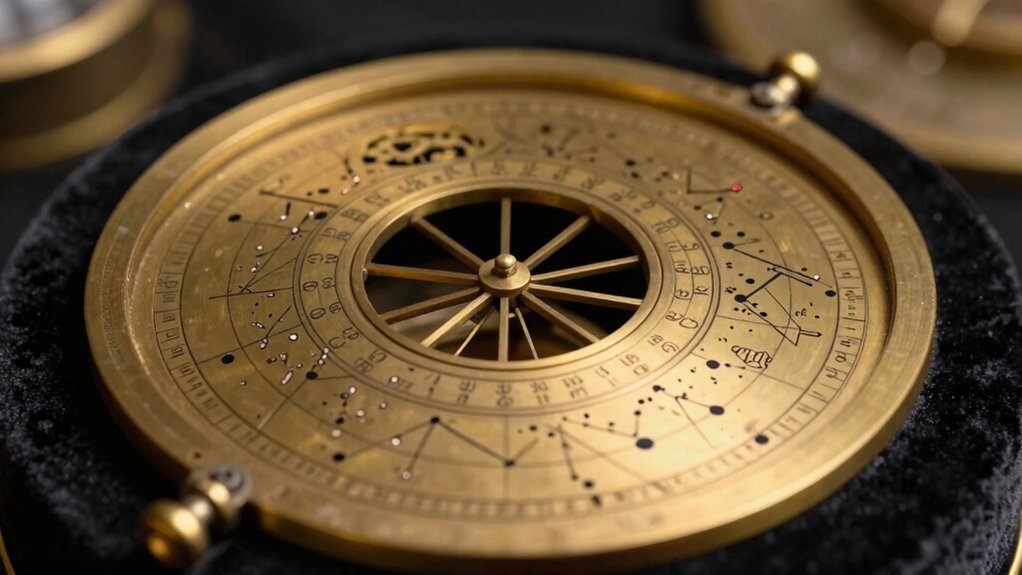
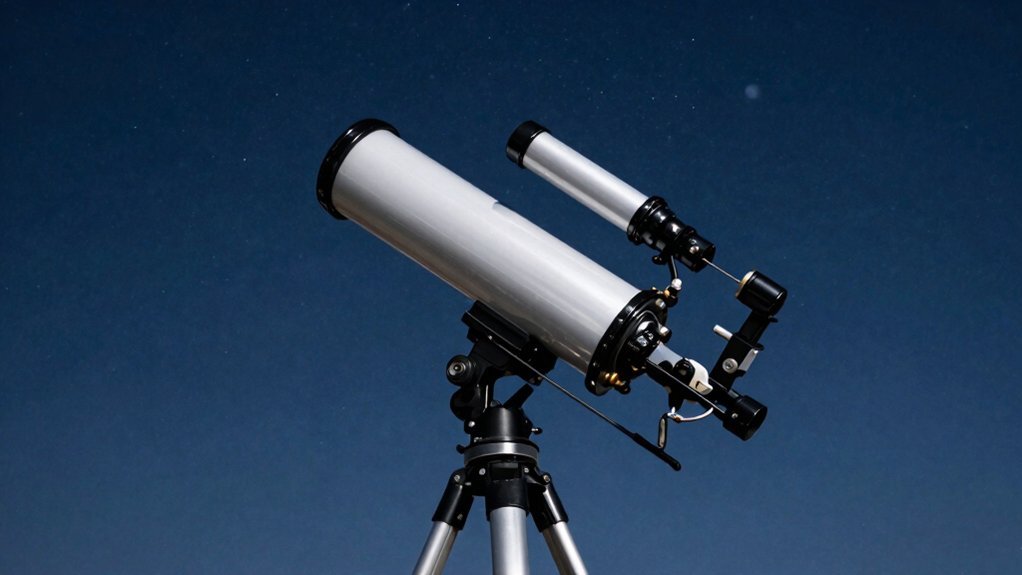
You’re wondering if a telescope really costs as much as a house, and honestly, you asked the right question. Prices jump from $400 for backyard scopes to nearly $10 billion for space giants like Webb. Obviously, bigger mirrors and precision mounts drive these insane numbers up fast. Now, let’s break down exactly where your money goes so you can see the real value behind those price tags.
What Are the Most Expensive Telescopes You Can Buy?
Ever wonder why some telescopes cost more than a mansion? You might think it’s just glass, but specialized telescope materials drive prices sky-high. The James Webb Space Telescope alone cost nearly $10 billion for its complex astronomical purposes. That’s twice Hubble’s price tag, proving scale matters immensely here.
Now, look at ground-based giants like the PlaneWave 1 Meter. You’ll pay $575,000 because aperture size demands perfect mechanics. Serious visual observing requires computerized mounts that track stars flawlessly without shaking. Obviously, bigger lenses mean tighter tolerances and way more cash. When evaluating these massive instruments, the stability provided by computerized mounts becomes a critical factor in maintaining image clarity during long exposures. For the most demanding observations, enthusiasts often rely on active optics to dynamically correct mirror deformations caused by gravity and temperature changes.
High-end consumer models still hit $18,000 for similar precision features. You get massive apertures and astrophotography-ready optics in these premium packages. Don’t confuse these with billion-dollar space projects though; those serve entirely different research goals. When comparing these options, you must weigh how optics performance directly influences both the final price and the specific needs of different stargazers.
How Much Do Premium Amateur Telescopes Cost?
While you might assume premium gear always costs a fortune, serious amateur setups actually start around $400. You’ll find solid 6-inch Dobsonians here, offering great views without breaking your budget. Obviously, prices climb fast as you add advanced telescope features like computerized tracking or imaging capabilities.
Now, consider your specific buyer preferences before spending thousands. A basic astrophotography rig often hits $800, while high-end computerized models easily reach $2,500. Some dedicated amateurs even push toward five figures for large, specialized instruments. Your final cost depends entirely on how much aperture and automation you truly need right now. Optical quality varies significantly across these price points, so evaluating mirror coating types helps ensure you get the best light transmission for your investment.
Here’s the thing: don’t overspend on specs you won’t use immediately. Start with a quality scope in the $400 to $1,000 range to learn the ropes. This approach saves money while you figure out your long-term observing goals. Ready to see which specific luxury models dominate this expensive market? Understanding the essential optics is crucial before investing in these high-priced instruments. Remember that larger primary mirror diameter directly increases light-gathering power, allowing you to see fainter deep-sky objects that smaller scopes miss.
Which Luxury Telescope Models Lead the Market?
How do you actually spot the true leaders in this crowded luxury market? You watch market trends closely. Top luxury brands like Takahashi and Astro-Physics dominate because they prioritize optical perfection over mass appeal. Refractors currently drive forty-one percent of total revenue, proving glass quality matters most.
Now, consider specific heavy hitters. The Meade 16-inch LX200 balances price and performance brilliantly for serious observers. Meanwhile, the Vaonis Hyperia redefines the category with its massive forty-five megapixel sensor. These aren’t just tools; they are investments in clarity. Celestron and Sky-Watcher also hold strong positions by blending computerized tracking with durable builds. High-end models often utilize exotic materials like fluorite or extra-low dispersion glass to eliminate chromatic aberration and ensure sharper image quality.
Obviously, leadership stems from precision mechanics and premium positioning rather than simple affordability. You need models that offer genuine scientific capability alongside stunning views. Focus on these established names to find your perfect match. While refractors lead in revenue, comparing telescope optics reveals why different designs suit specific stargazing goals. Next, let’s explore how aperture size directly drives those staggering price tags. Understanding optical design types ensures you select a system that aligns with your specific observational goals before making such a significant purchase.
How Does Aperture Size Drive Telescope Prices?
Since you’re wondering why prices jump so wildly, let’s tackle aperture size directly. You’ll see that bigger mirrors demand more material and stricter tolerances, driving costs up fast. Obviously, these aperture effects mean a small diameter increase creates a huge price spike.
Here’s the thing: cost doesn’t rise linearly but rather scales to the power of 2.5 for modern units. A 200mm scope gathers four times the light of a 100mm one, yet costs far more than double. These price implications explain why jumping from six to eight inches feels expensive.
All right, so larger telescopes actually cost less per square meter of collecting area overall. You get better efficiency on big projects, even if the total bill shocks you. Remember that every extra inch roughly doubles your light-gathering power and your budget needs. Understanding light gathering power is essential because it determines the faintest objects visible, which is the primary reason astronomers prioritize aperture above all other features. Manufacturing large optics also requires specialized glass blank casting techniques to ensure the mirror maintains its shape without internal stresses. Different optical designs like refractors and reflectors utilize these large apertures in unique ways to balance optical performance against the rising costs of materials and fabrication.
Now you know why aperture dictates your initial sizing decision before even looking at mounts. Ready to see how those heavy mirrors demand pricey support systems next?
Why Do High-End Mounts Increase Total Costs?
Two major factors spike your mount bill: precision engineering and heavy-duty electronics. You need tight tolerances for perfect tracking accuracy under heavy loads. Basic mounts simply can’t match this rigorous precision engineering without failing. Even under ideal viewing conditions, a shaky mount will ruin the experience for any observer.
Higher load capacity demands stronger axes and massive bearings too. Specialized drive systems like harmonic drives further push prices toward twenty thousand dollars. These advanced mechanisms eliminate backlash while keeping your gear portable and smooth.
Market positioning also plays a huge role in these steep costs today. Manufacturers include bundled features like GoTo computers and premium counterweights automatically. Obviously, you pay extra for this complete, ready-to-shoot professional package right now.
Your mount costs more because it acts as a precision instrument itself. Don’t underestimate how much stability matters for your final sharp images. Understanding the role of mount stability is essential when evaluating why high-end models command such premiums. Next, consider what full imaging rigs actually cost to complete your setup. When evaluating these investments, it is crucial to compare telescope options side by side to understand how optics, performance, and cost align with your specific stargazing needs.
What Are the Costs of Full Imaging Rigs?
If you’re wondering why a “complete” rig costs way more than just the telescope, you’re asking the right question. You need mounts, cameras, and software too. Obviously, entry level rigs start under $500 with basic combined units. However, serious deep-sky work often demands at least $1,155 for a starter refractor setup. For instance, a beginner aiming for quality might spend $478 on a William Optics Redcat 61 telescope alone before adding other essentials.
Mid range setups quickly climb toward $4,000 once you add dedicated cameras and filters. A single motorized focuser alone might cost you another $200 right there. Even compact systems hitting $2,710 include guides, power boxes, and cooled sensors. Don’t forget accessory costs like batteries or mini-PCs adding hundreds more. Cables, dew heaters, and tripads consume your budget faster than you expect. The specific telescope types you select will significantly influence the compatibility and cost of these necessary components. Different optical designs require varying levels of investment in mount stability to ensure sharp imaging results. Understanding how light gathering capability scales with aperture size helps explain why larger optics necessitate heavier, more expensive support structures.
You see how small parts build massive totals quickly. Now you understand why full packages exceed simple telescope price tags. Ready to explore truly massive observatory investments next?
Can You Buy a Million-Dollar Observatory Scope?
Can you actually drop a million bucks on a single telescope? Yes, you certainly can if you seek true professional power. While most premium amateur rigs stop at five figures, massive aperture scopes climb much higher.
Here’s the thing: large optics and precision mounts drive costs skyward quickly. A PlaneWave RC1000 hits $700,000, proving you can approach that seven-figure mark easily. Custom integration pushes your total bill past a mere million dollar investment without much trouble. Even the 16-inch model of the Meade LX600 series stands as the largest and most expensive variant in its popular lineup, costing up to $21,000 with a tripod.
Obviously, buying an entire observatory system means paying for more than just glass. You need heavy piers, enclosures, and complex control hardware to support such weight. This isn’t hobby gear; it is institutional-level equipment for serious data collection. When selecting optical designs for these extreme budgets, buyers often prioritize Ritchey-Chrétien systems for their superior wide-field imaging capabilities and lack of coma. For those considering such investments, understanding the specific aperture requirements needed for deep-sky resolution is critical before committing to a purchase.
How Do Ground Telescopes Compare to Space Costs?
You just saw how a million dollars buys a massive ground scope, so you’re probably wondering why space telescopes cost so much more. Launch constraints force engineers to build lighter, tougher instruments that survive violent rocket rides. These strict limits skyrocket space telescope costs compared to their earthbound cousins.
NASA models suggest space units run ten to thirty times pricier than similar ground gear. You pay for radiation hardening, extreme thermal control, and complex deployment mechanisms too. While ground telescope prices scale with mirror size, space adds launch fees and orbital operations. Hubble cost $1.5 billion, whereas giant Keck telescopes totaled just $140 million. Obviously, escaping gravity demands a massive premium over building on solid rock.
Ground scopes offer huge apertures for fractions of space mission budgets. You get more glass per dollar staying on Earth. Next, let’s explore who actually needs such expensive gear.
Who Actually Needs a $100,000 Telescope?
Why would anyone drop six figures on a single tube? You probably wonder if such madness exists for regular folks. Honestly, you don’t need this beast unless you chase specific scientific goals.
Professional astronomers demand these systems to block bright starlight and find exoplanets. They require massive apertures to gather faint photons from distant, crowded targets quickly.
Perhaps you pursue advanced astrophotography and need to resolve tiny galaxy structures. Your current gear likely blurs those fine details during long exposures. This price buys premium mounts that track with research-grade accuracy all night. Such an instrument offers over 10 times the resolution of cheaper models, enabling observation of small and faint galaxies unattainable by entry-level equipment.
Obviously, casual stargazers or beginners should skip this financial cliff entirely. You get better value from used equipment while learning fundamental skills first.
Only buy this if you run a permanent observatory for serious work. Otherwise, save your cash for a vacation under darker skies instead.